Author: Christopher Fernandez

  • After the Storm: Learning to Accept the Present

    Directed by Hirokazu Koreeda Released: March 2017
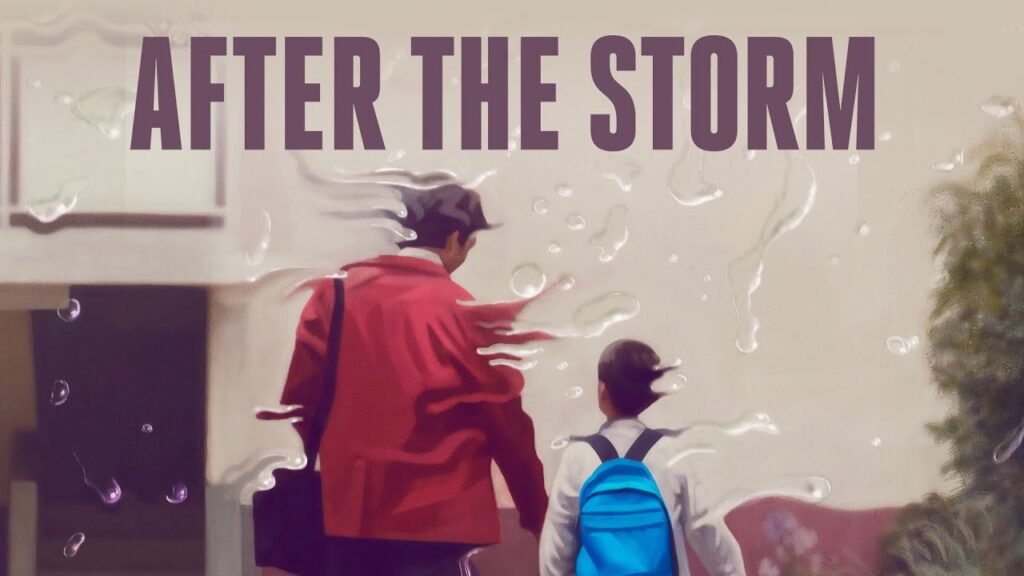
    The story begins with the radio telling of an impending storm. This storm will come and go along with the revelations of the character Ryota, as he goes through a change throughout the film. He begins as this gambling addict PI unable to get a foot hold on his finances and unable to look at his present self. He always looks to his past self or his potential future when he finally writes a new novel. Both versions of himself do not exist. The film dives into this theme of needing to learn to accept your present self. 

    It displays by showcasing how Ryota is stuck in a PI job, working day by day fantasizing about potentially winning the lottery or dreaming about his past self when he was an award winning novelist. He is unable to ground himself in the present. He coasts throughout life following other people, cheating, and lying to everyone around him. He takes no interest in his own life because the pain he feels by evaluating himself is too great. He rejects himself because he’s afraid of the truth which is that he failed to become the man he dreamt he’d be as a child. It isn’t until he speaks to his ex-wife that he learns to accept himself for who he is as a person. He accepts the present truth. He is no longer the novelist who won that great award, and he is not a person who will win the lottery, he is simply Ryota, a single father working as a PI with little to no money. Once he begins to accept his present, he begins to find himself once again. 

    The theme is reinforced with the help of its use of plot points in showing how Ryota’s beliefs of himself impact his life negatively. For example, his gambling habit is stated to be a wish for a better future. This only leads to him constantly being behind bills, child support, and personal debts for the sake of a future that will never be. His inability to move on from his past is due to his belief that he will write a new book. This leaves him constantly dismissing opportunities that would better his life, as seen when he declines to write for the manga presented to him by his publisher. He is frozen in place focusing on the past and other other people rather than his own present self.

    The film utilizes cinematography to immerse the viewer in the characters’ world. Rather than loud bombastic shots, the film opts for a more quiet approach. Focusing on the small moments, with little to no movement. The shots focus on the characters and their dynamics. It aims to place the viewer in the world of Ryota, with shots on the floor when he sits side by side with his ex-wife, or shots at the table. It never tries to shock or awe but to ease you into the world. Very similar to works like Ozu with the tatami shot. 

    Overall, the story and cinematography demonstrates the vision of the director and message of learning to accept the present. It showcases the negative consequences that occur if you reject the present and uses cinematography to place the viewer in the world of the protagonist. The film well done and I personally recommend it to anyone who feels as though they have failed themselves at one point. 

  • 2046: Trapped in the Past

    Background of the Director:

    Old Hong Kong 1960’s


    The name of 2046 originally began as a joke that Wong Kar-Wai thought of when they were shooting In the Mood for Love. After seeing the hotel room number, he decided to change it from 30- to 2046, as a small connection to the film 2046. This began the change for 2046, which was originally intended to be two different films now joined together. With this in mind the films began to change, as Wong Kar-Wai decided to add Tony Chow as a connecting character. In the Mood for Love  can be seen a s a prequel to 2046 or a “lost chapter” to the film. The two films show the change from a once kind and decent family man to a playboy who is unable to sit still.

    Thematic Statement: 

    Refusing to move on, can only lead to the prolonging of pain.

    Characters:

    Chow Mo-Wan

    A writer barely scraping by, who once loved someone deeply (Su Li-Zheng from In a Mood for Love), but now womanizes for the sake of his own satisfaction. He finds his way back to Singapore in search of Su, only to be constantly searching for her in different women. He’s a charismatic man who’s honest with his wants, and never lies about his intentions. 

    His career reflects his inability to let go and his need to constantly be dreaming of the one that first took his heart away.

    Su Li-Zhen (Old)

    A woman who haunts Chow’s past. The same person who was in In the Mood for Love. It is unknown what happened to her after the events of the film but it is speculated that she was killed or traveled away never to be seen again. She is the representation of everything Chow wants but can never attain. A ghost that haunts him in every relationship. A ghost of his former self. 

    Bai

    The loud neighbor next door that moves into the room next to Chow. She brings a large variety of men to her place and is thought to be a call girl. She eventually falls for Chow and has a one sided love for him which he never reciprocates. She continues to search for love in a one sided relationship. 

    Wang Jin-Wen:

    The hotel owner’s daughter falls in love with a Japanese man. She is unable to go with the one she loves because her father opposes the marriage due to the negative history with China and Japan. Wang symbolizes the hopeful aspect of love where in perseverance happy endings do exist. She works for her father, eventually gaining autonomy and finding work. She helps Chow with his novel and eventually becomes a love interest. She never reciprocates the same feelings for him.

    Su Li-Zhen (New):

    A gambler capable of winning. She finds Chow before the events of 2046 and has the same name of the woman he once loved.

    Setting:

    A hotel, a place where people are constantly coming and going a lot like Chow Mo-Wan’s life and how he has a cycle of revolving woman who he uses to relive his past. He is man unable to plant roots or settle down and will constantly be searching for something to make him feel that same sensation. The film is primarily set in the hotel rooms, with some shots being a ball room or in a taxi. The film overall is very minimal in its location.

    Camera-Work:

    The signature Wong Kar-Wai style with Christopher Dole at the helm. He uses stutter frames, saturated colors, intimate close up and few camera movements. The lighting in the scenes are glowy with hardly any hard shadows with mostly soft lights deeply saturated yellows and reds. You can see the sweat on their face as the light reflects.

    Overall Impressions:

    The film is a dive into the pain that not letting go can cause in both yourself and others. It also shows that not all love is doomed for failure. Sometimes we meet the right people at the wrong time.

  • Hello world!

    Welcome to WordPress. This is your first post. Edit or delete it, then start writing!